

Written by
A Journey Through Germany’s Memory: Peenemünde, Wittenberg, Halle, Berlin
Germany · Memory · Travel notes
A Journey Through Germany's Memory
Peenemünde, Wittenberg, Halle, Berlin
I move between worlds. Between Ghana, Germany, Great Britain, and the old GDR.
Four countries, four cultures, four identities — all beginning with the letter G, and all carrying their own weight of history, memory, and contradiction.
Maybe that is why I travel the way I do. Not for leisure, but for understanding. Not to escape, but to observe. Not to consume, but to document.
In the last days, with almost no sleep, I set out again. With the Deutschlandticket in my pocket and a restless mind, I travelled to:
Peenemünde → Berlin → Wittenberg → Halle
A journey through Germany's memory — and through my own.
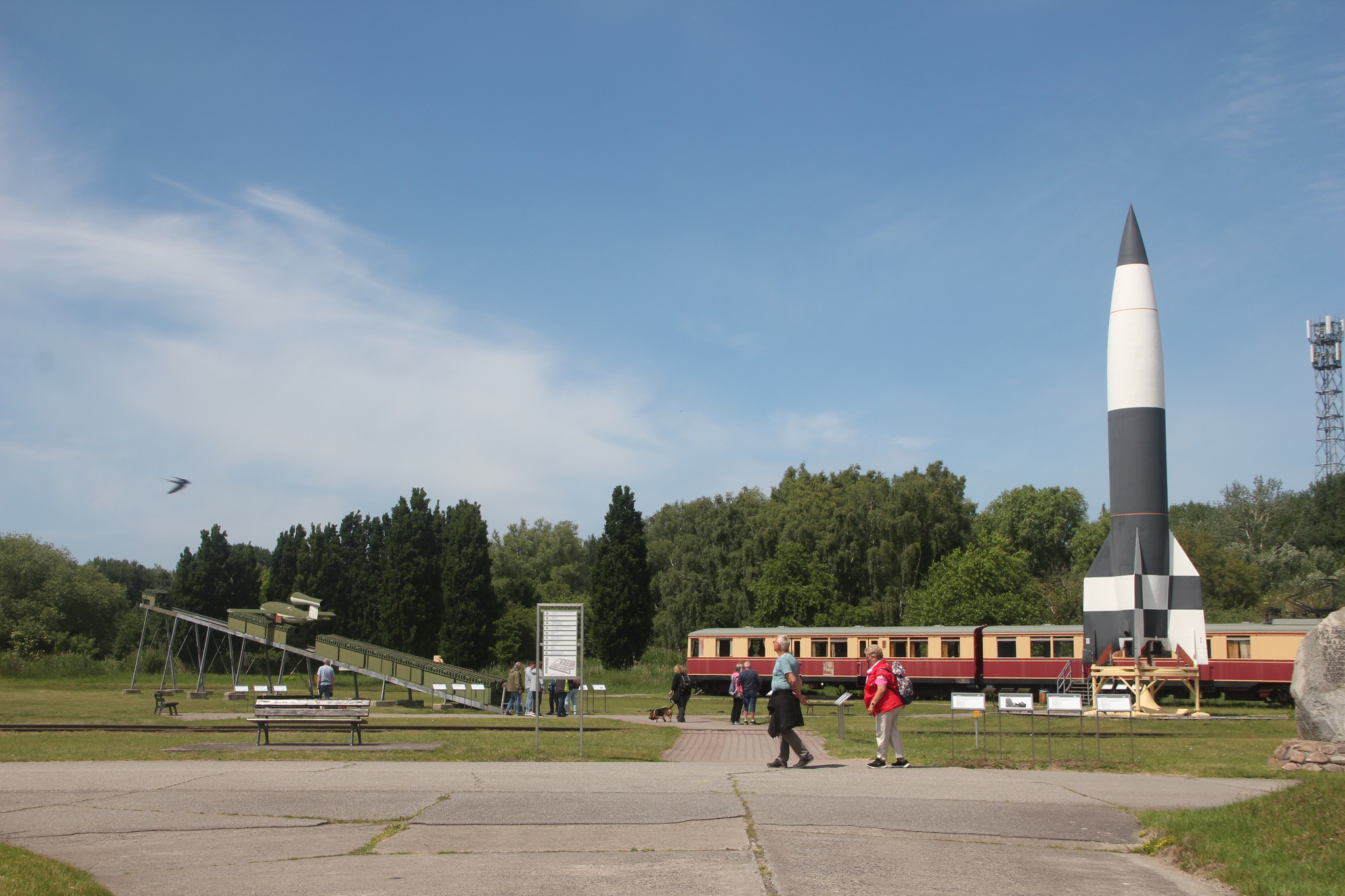
A journey through Germany's memory — and through my own.
Peenemünde – A place that refuses to disappear
I visited Peenemünde years ago. Back then, the site felt frozen: brick, concrete, wind, silence. But something stayed with me, something unfinished. So I returned.
The journey is long:
Berlin → Züssow → change in Zinnowitz → Peenemünde
A route that still feels like the GDR, with its slow rhythm and wide landscapes.
Peenemünde has changed:
- There is now an elevator leading to a rooftop terrace.
- The museum grounds are more clearly marked.
- Fresh paint here and there.
- And on the upper floor, a new exhibition showing fragments of the rocket programme — metal pieces, cables, rusted remains of a dark chapter of technological ambition.
What is gone are the two residential blocks from the late 1930s. In 2011 they still stood. Now they are demolished, replaced by modern housing.
The path of money, not the path of reason.
I wanted to visit the old Prussian fortress on the Polish side of the island. No time. Another day, perhaps.
Berlin – Mohrenstraße, Amo, and the strange politics of naming
A few days earlier, I documented the renamed U-Bahn station Mohrenstraße — now officially Anton-Wilhelm-Amo-Straße.
Inside the station, the new name is everywhere. But on the walls, in large GDR-era ceramic golden letters, it still reads:
MOHRENSTRASSE
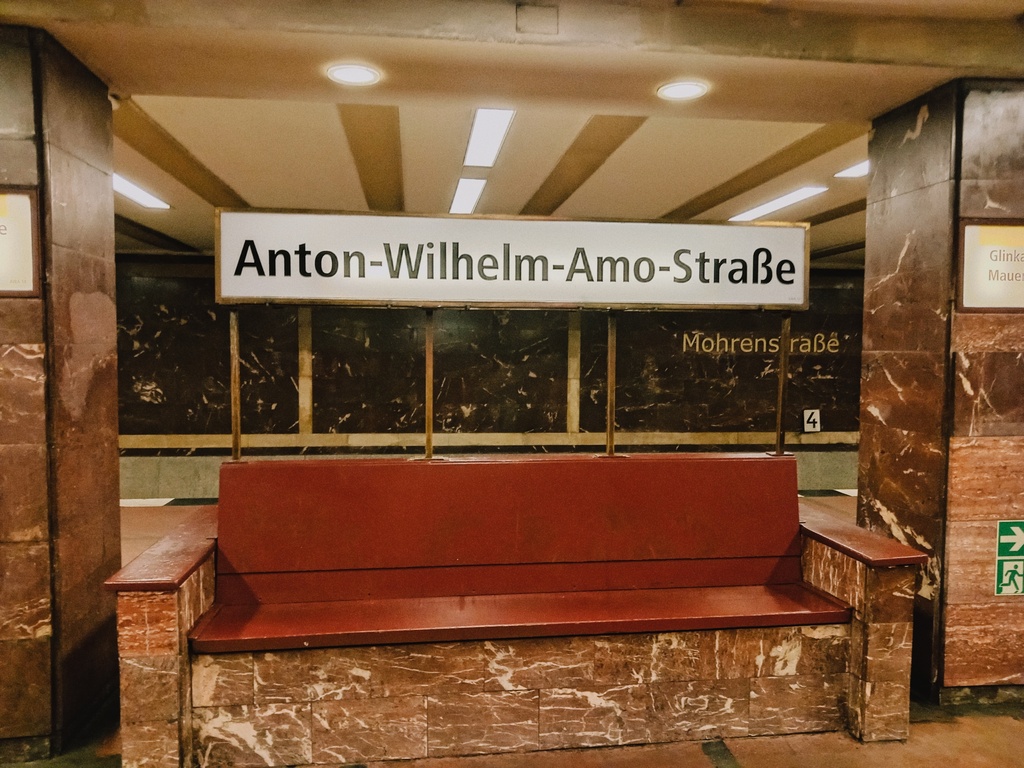
A perfect symbol of Germany's memory struggles: the new name layered over the old, but the old still visible, still present, still uncomfortable.
And then comes the irony.
The station is renamed after Anton Wilhelm Amo, the first African philosopher in Europe — yet in Halle, some academics argue:
"Amo should not be seen as a Black man, but primarily as a European philosopher."
That is literal whitewashing.
Because in Ghana, people have no problem naming things as they are:
- Obroni – White person
- Bibini – Black person
- In the Upper East Region: Solomia – White person
No drama. No identity panic. No endless debates. Just reality.
Anton Wilhelm Amo @ Ghana-Net · Anton Wilhelm Amo @ Cape Coast Castle
Context, not erasure. Explanation, not whitewashing. We need history, not cosmetic corrections.
Wittenberg – Amo, Luther, and the relief that refuses to go away
I decided to travel to Halle — via Wittenberg.
Trains leave Berlin Hauptbahnhof every two hours: 08:40, 10:40, 12:40. They can get crowded.
On the way, I sat next to a woman. She was heading to a discussion about the anti-Jewish relief on the Stadtkirche St. Marien. She is involved in planning the exhibition inside the church. Her position was clear: "It should not be there. It must be removed."
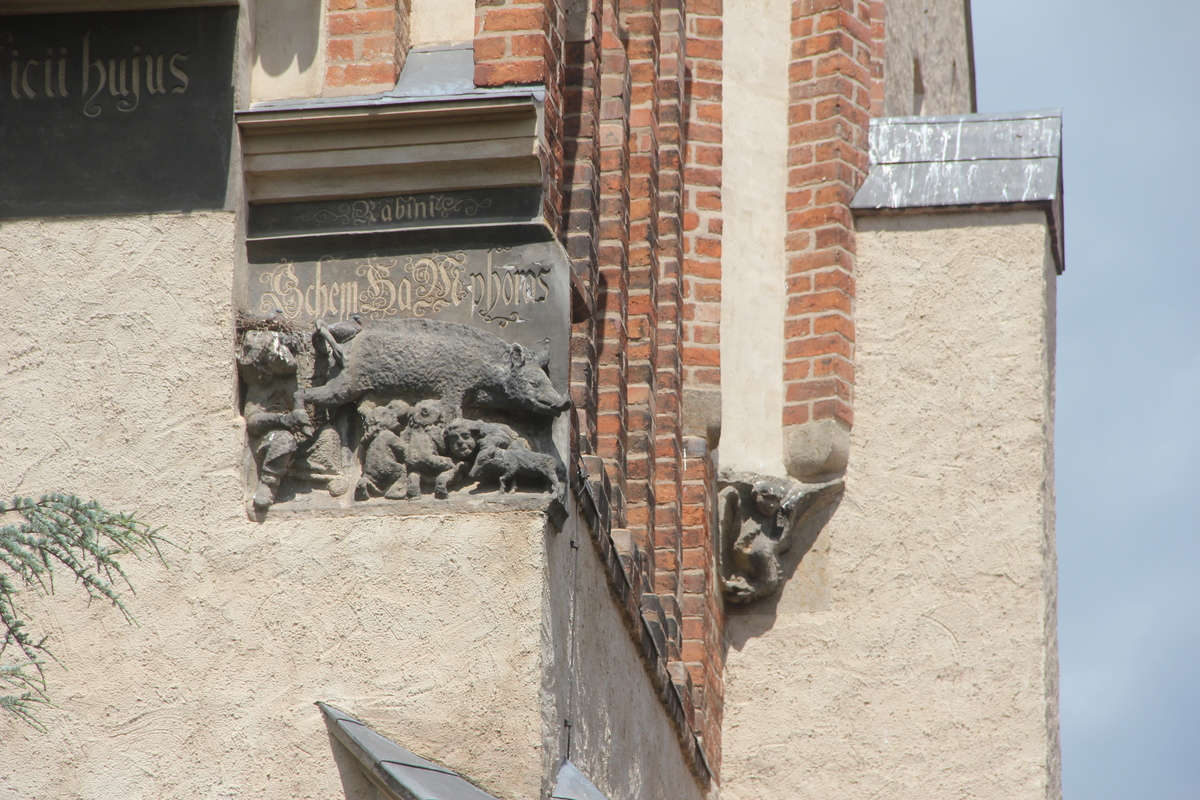
I explained my view:
Context, not erasure. Explanation, not whitewashing. We need history, not cosmetic corrections.
Later, inside the church, I overheard a conversation with the pastor. He said exactly the same thing: he does not want removal. He wants context.
The woman from the train — thankfully — belongs to the minority.
Practical, because someone will ask:
- The combined ticket for the Stadtkirche and the Schlosskirche (where Luther posted his theses) is 5 euros.
- The Schlosskirche tower is another 3 euros.
- A separate exhibition costs another 3 euros.
On the way to the Schlosskirche, there is a private museum called "Geschichte des 20. Jahrhunderts" — essentially a renamed GDR museum, because everything inside is GDR.
I did not eat at the Kartoffelhaus. I only passed by. A friendly waitress came outside to tell me my backpack was still on a chair inside — a small act of kindness that says a lot about the place.
I ended up eating at the Italian restaurant next door — less busy, good food.
And as I sat in the quiet of the church, I thought:
Amo was here. He studied here. He walked these streets. He knew these walls.
It is a powerful feeling to sit in a place where history is not told — but present.
Halle – Amo's city, and the traces that remain
My journey continued to Halle. Amo lived here. He taught here. He is part of the city's intellectual DNA.
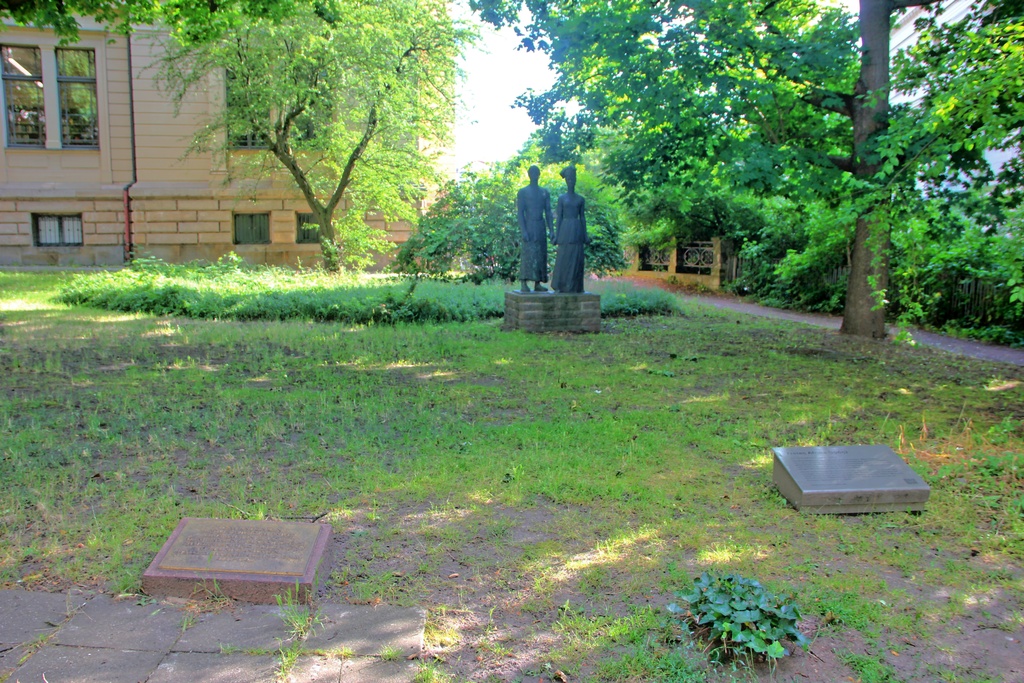
And yet, Halle also has its own debate: the Mohren-Apotheke. Another name from another time. Another discussion about removal versus explanation. Another example of how Germany struggles with its past.
If everything uncomfortable is removed, what remains to learn from?
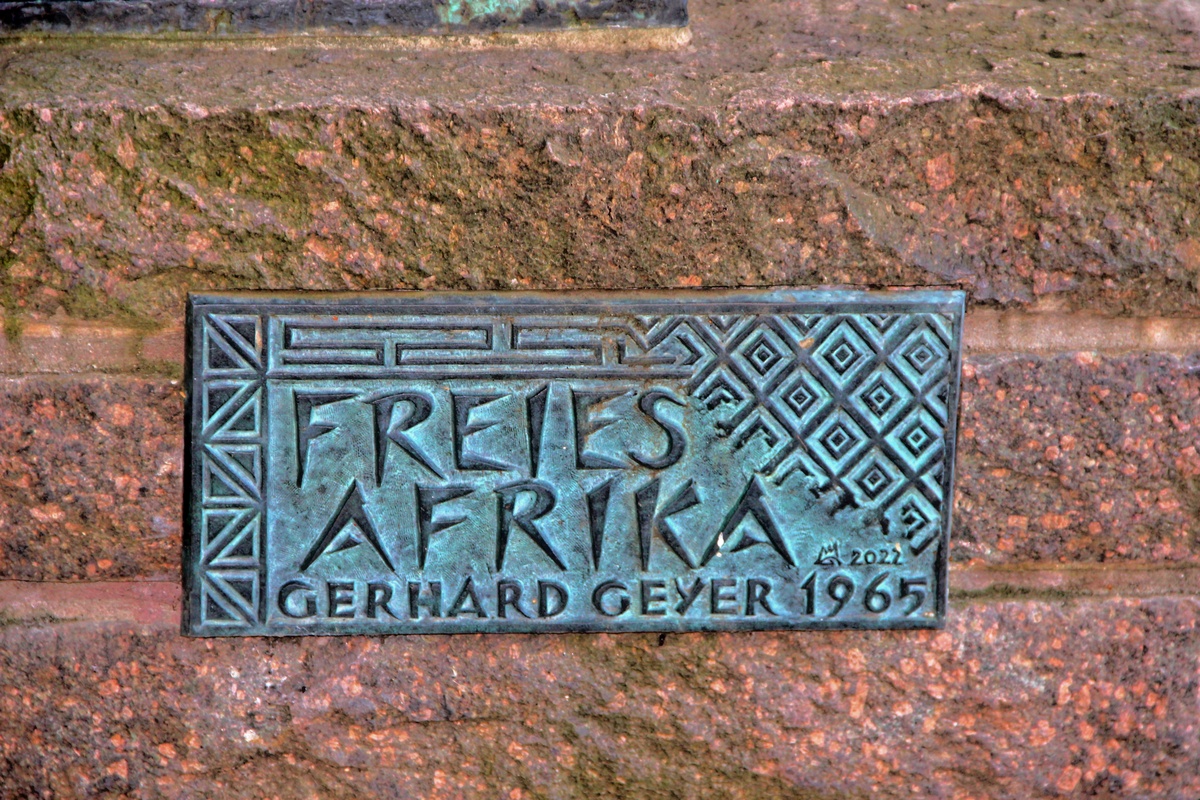
The search for Amo's memorial — and the silence around it
In Halle, I searched for the Amo memorial. I asked several people along the way — older people, students, shopkeepers.
Almost nobody knew about it.
Only one younger woman mentioned that a street in Halle had been renamed after Amo. A student recognised the building behind the memorial in a photo I showed him — but not the memorial itself, nor Amo's story.
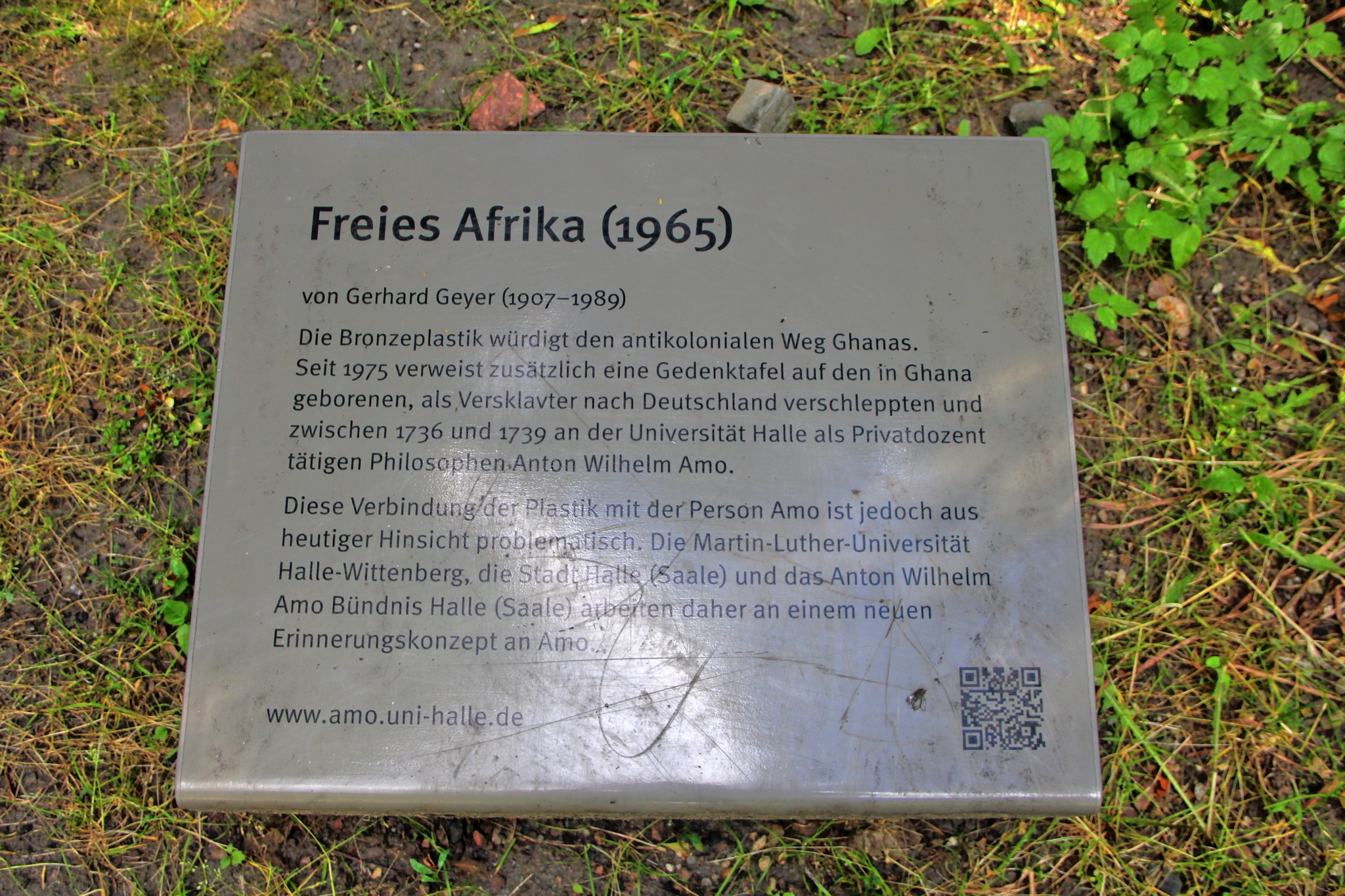
Amo lived here. He taught here. He shaped the intellectual life of the city.
And yet, most people walk past his memory without seeing it.
That silence says more than any debate.
The long way home – A 13-hour journey
My return to Berlin was almost comical.
The direct S-Bahn from Wittenberg to Halle earlier that day had been so overcrowded that even sardines in a tin would have had more space.
So on the way back, I had to take:
Halle → Leipzig Messe → Dessau (on a Magdeburg-bound RE) → Berlin-Spandau → S-Bahn → U-Bahn → Bus
A 13-hour round trip. All for a journey that, on paper, looks simple.
But history is never simple. And neither are the roads that lead to it.
What this journey taught me
I am tired. I barely slept. I ran through cities, changed trains, crossed stations, sat in churches, listened to strangers.
But I understood something:
Germany wrestles with its memory. Ghana lives with its memory. Great Britain manages its memory. The GDR lost its memory.
And I — standing between all these worlds — see more clearly than ever:
We need context, not erasure. We need explanation, not whitewashing. We need history, not historical editing.
This journey was not a trip. It was a mirror.
And I write it down here so it will not be forgotten.
Tours in eastern Germany
Guided tours around Berlin, Potsdam, Wittenberg, Halle, Leipzig and Dresden, up to Saxon Switzerland and Bad Schandau. Entrance fees are included in the tour price; tips are not included but always welcome.
Related reading
- My special V2 website: Peenemünde and the rocket programme
- Anton Wilhelm Amo: the first West African professor in Europe
- The boy who refused to bow: the story of Anton Wilhelm Amo
- Dresden: a city rebuilt by hand
- The waterfall that runs on schedule: Bad Schandau and the Kirnitzsch Valley tram
- Oranienburg: a return to a place that somehow never moved
- Berlin through my lens: a city etched in memory
- Why I still build my life around stories
Search my network – plus over 50 African info, tourism and travel sites
All photos (c) Remo Kurka. Updated October 2026.

