
Written by
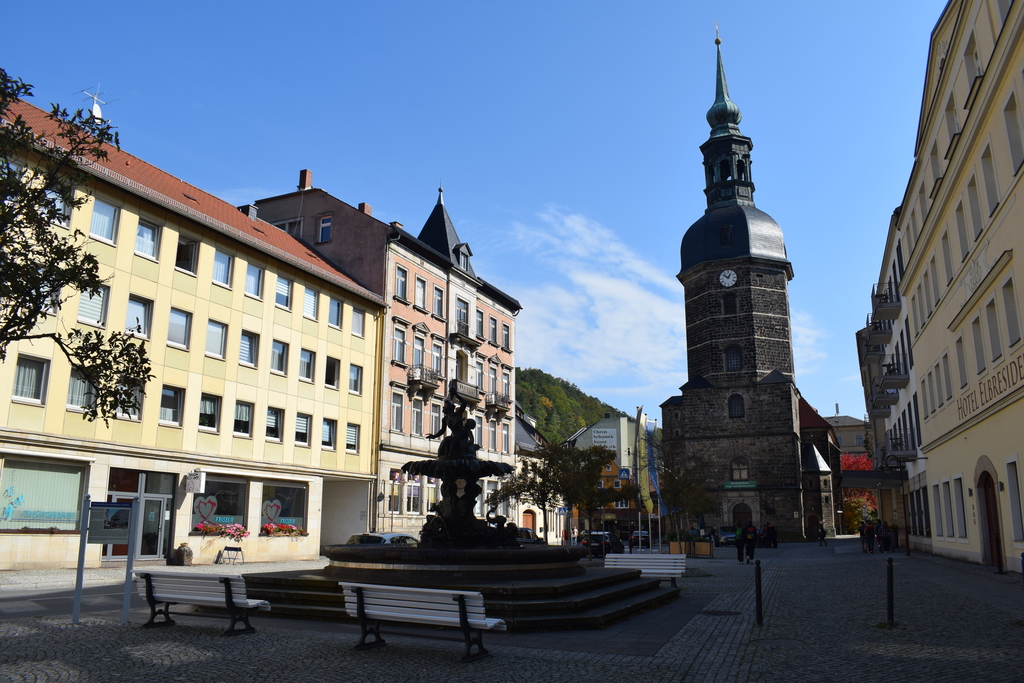
The Waterfall That Runs on Schedule: Bad Schandau, the Kirnitzsch Valley Tram and the Lichtenhain Falls
Germany · Saxon Switzerland · Travel notes
The Waterfall That Runs on Schedule
Bad Schandau, the Kirnitzsch Valley tram and the Lichtenhain Falls
Some places are famous for what nature gives them. Others are famous for what people make of it.
Lichtenhain is the second kind. A small stream, a rock wall, a wooden weir, and a waterfall that does not simply fall. It waits. It gathers. And then, every thirty minutes, it is released.
I went there with the Deutschlandticket in my pocket, autumn in the trees, and no real plan except to see if the stories were true.
They are. And they are better than I expected.
Dresden → S-Bahn S1 → Bad Schandau station → ferry across the Elbe → Kurpark → Kirnitzsch Valley tram → Lichtenhain waterfall
Bad Schandau – Where the journey starts on the water
The railway station of Bad Schandau is not in Bad Schandau. Not really. It sits on the other bank of the Elbe, a little downriver, and the town waits on the far side.
So you do what people here have done for generations. You take the ferry.
A crowd was already waiting when I arrived. Hikers with sticks, families with prams, old couples in good jackets, and a few of us with cameras. Nobody pushed. Nobody complained. The boat came, we boarded, the river carried us across.
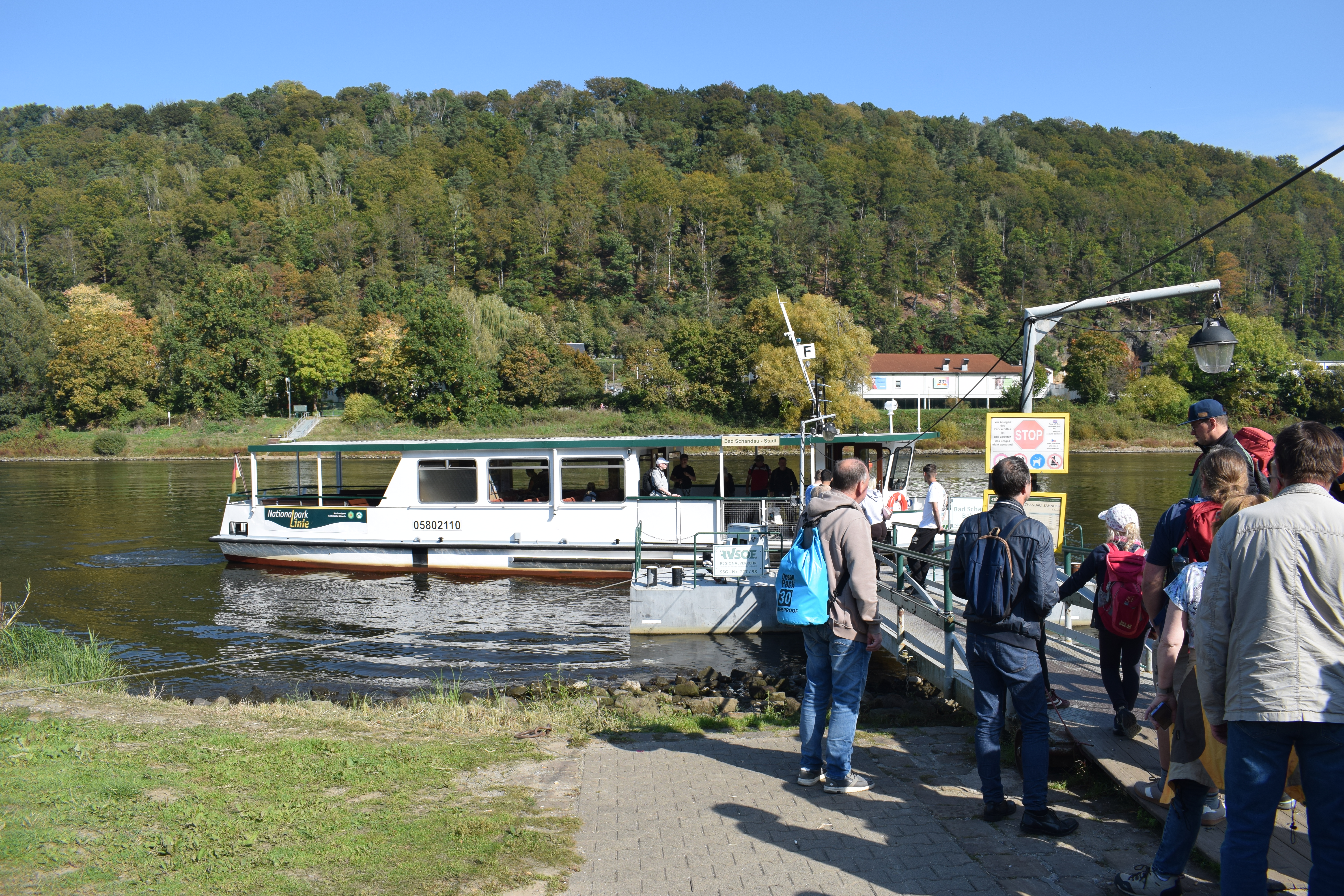
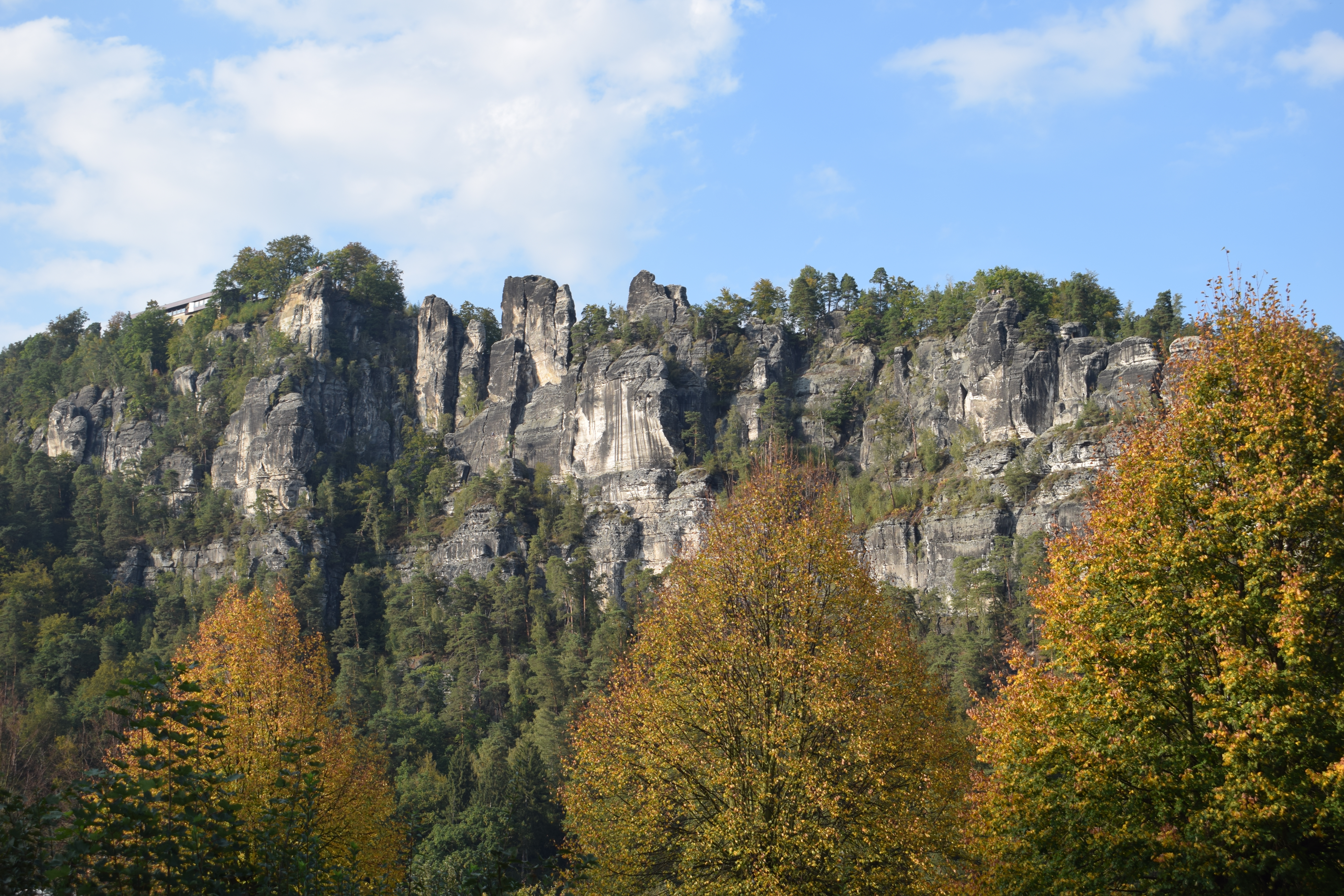
A few minutes on the water, and the town begins: hotels, spa houses, terraces, and behind them the cliffs of the Elbe Sandstone Mountains, glowing in autumn colours.
The ship that could not sail
On the riverbank lay an old Elbe ship. Beautiful, polished, proud. And going nowhere.
The water was too low. The Elbe, the river that built this whole region, simply did not carry enough to float her. So she rested at the bank, with the most beautiful view of the river, waiting like everything else here seems to wait: patiently, and without drama.
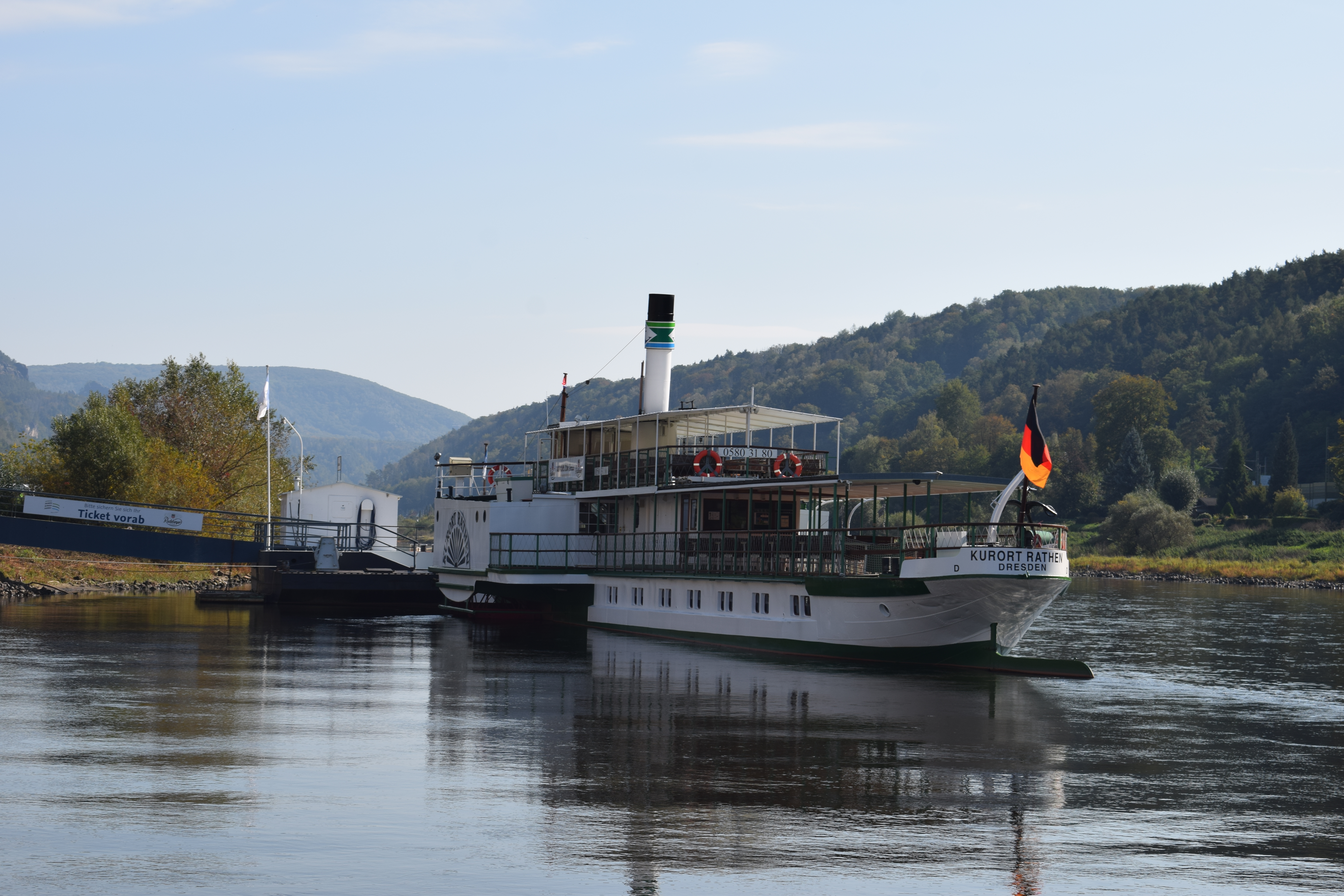
The river that built this region did not carry enough water to float its own ship.
The Kirnitzsch Valley tram – 1898 and still rolling
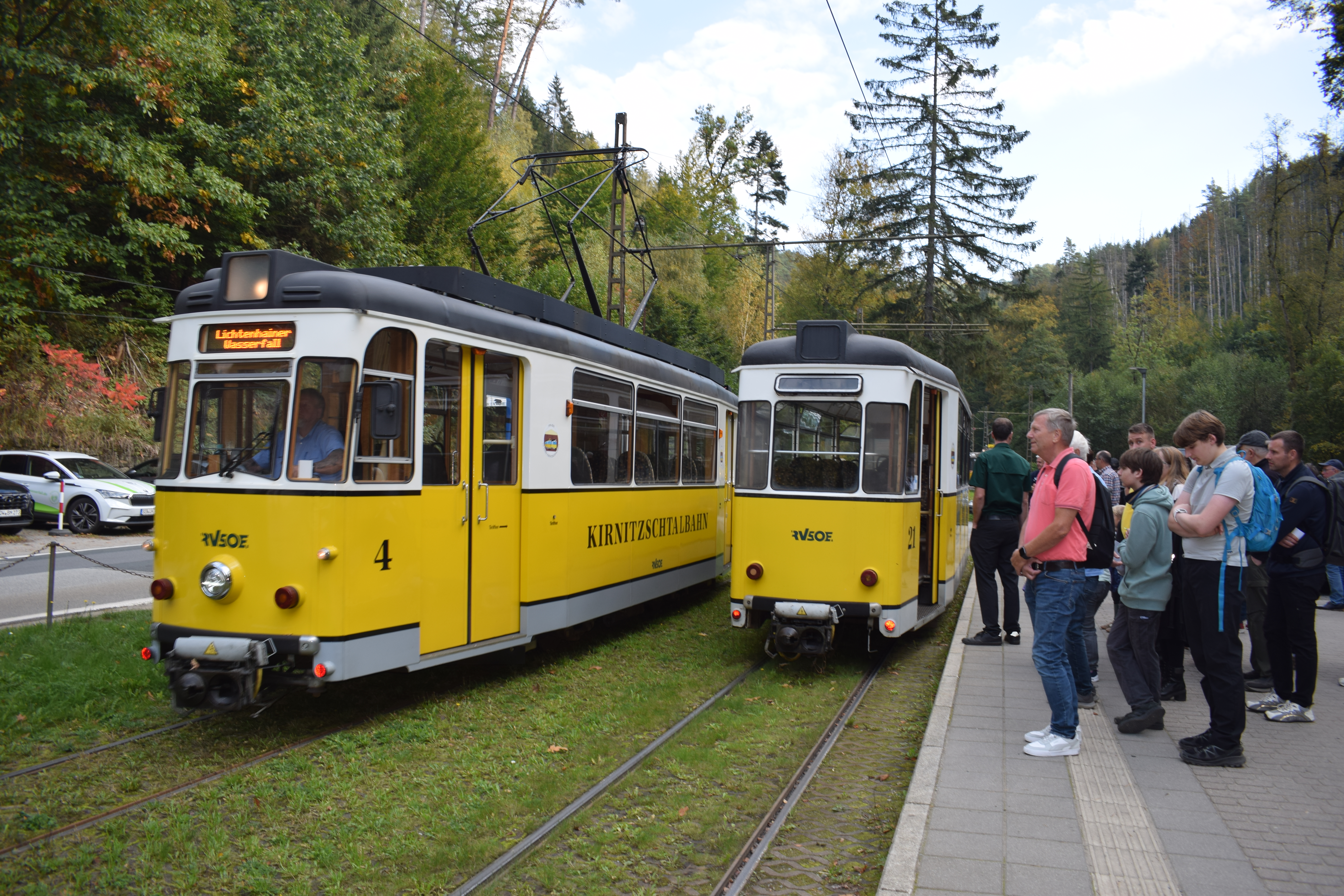
From the Kurpark, a yellow tram waits. Then another one. Older than anyone on board.
The Kirnitzschtalbahn opened on 28 May 1898, from Bad Schandau to the Lichtenhain waterfall. About eight kilometres, single track, most of it running on the road itself, squeezed between the river, the rocks and the trees. It is said to be the only tram in the world that runs into a national park.
The ride takes around 25 minutes. It feels longer, in the best possible way.
Practical, because someone will ask:
- A return ticket costs 10 euros.
- With the Deutschlandticket, the ride is already included.
- For the even older historic tram, you pay 1 euro extra.
- In summer, trams run every half hour. In winter, much less often, so check the timetable.
And here is the detail I liked most. The operator tested a modern low-floor tram here. Then decided against buying new ones, to keep the historic look that brings the visitors.
Read that again.
A transport company that understood that its old trams are not a problem to be solved, but the attraction itself.
The old trams are not the problem. They are the reason people come.
The cars are so authentic that they appeared in the film "The Reader". The line survived the GDR years, cuts and closures, reconstruction, and the Elbe flood of 2002, when the depot stood under water up to the tram floors.
It is still here. Slow, rattling, rewarding.
Lichtenhain – The waterfall with an operator
At the end of the line: the waterfall. Or rather, first, the absence of it.
I arrived to a wet rock wall and a thin trickle of water. Nothing more. People stood around, looked at their watches, and waited.
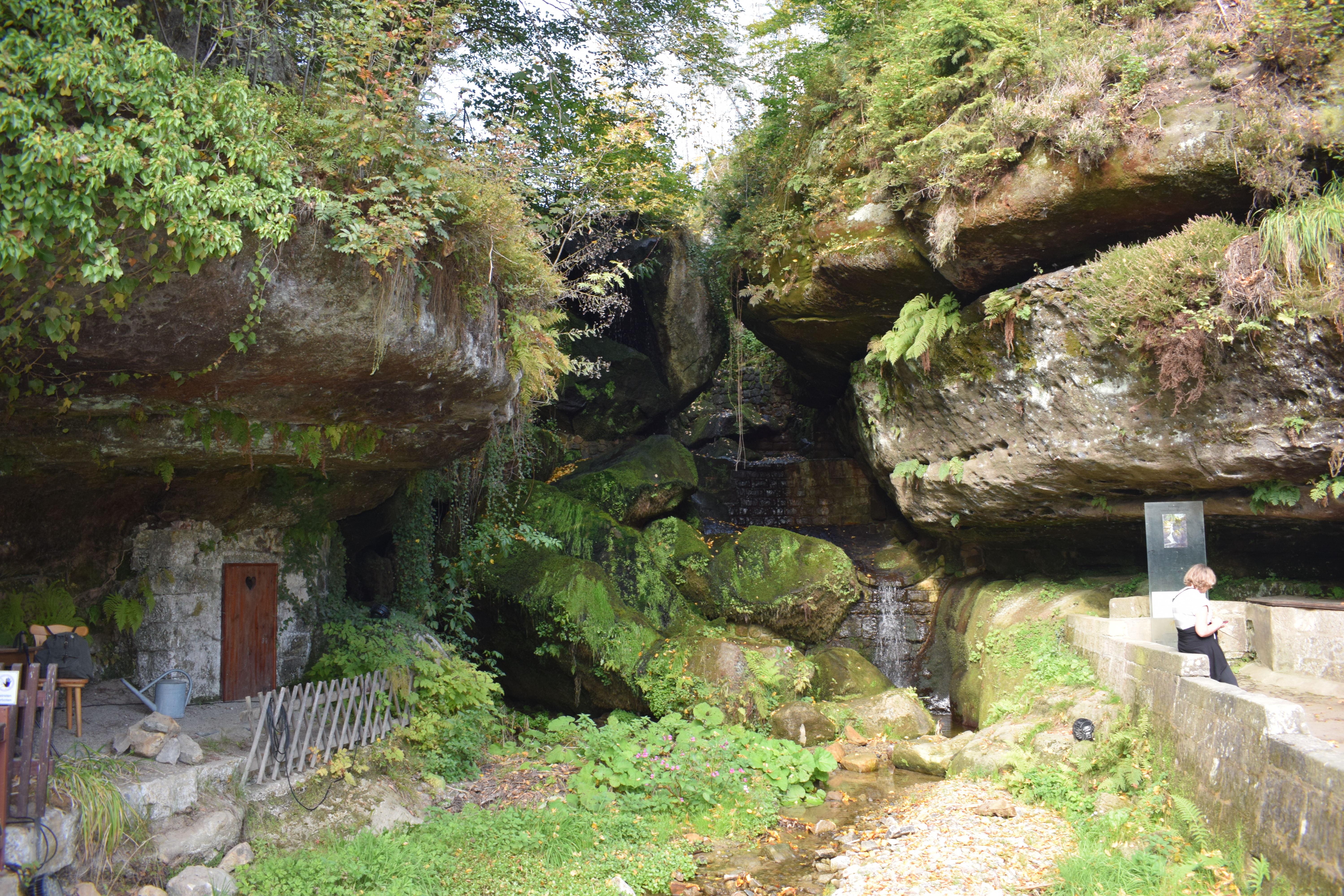
Because this waterfall has a timetable.
About two hundred years ago, Lichtenhain had an official "waterfall puller". When enough water had gathered behind the weir and enough visitors had arrived, he opened it. The stream turned into a roar, the crowd said "oh" and "ah", and he collected his tip.
He ran a small drinks stall in a bark hut. Early tourism, Saxon style: a show, a drink, a coin.
The historic weir was restored in 1994. Since then, every thirty minutes, the gate opens again. Today automatically. No man with a lever, no hat for coins. But the same moment.
And then it came.
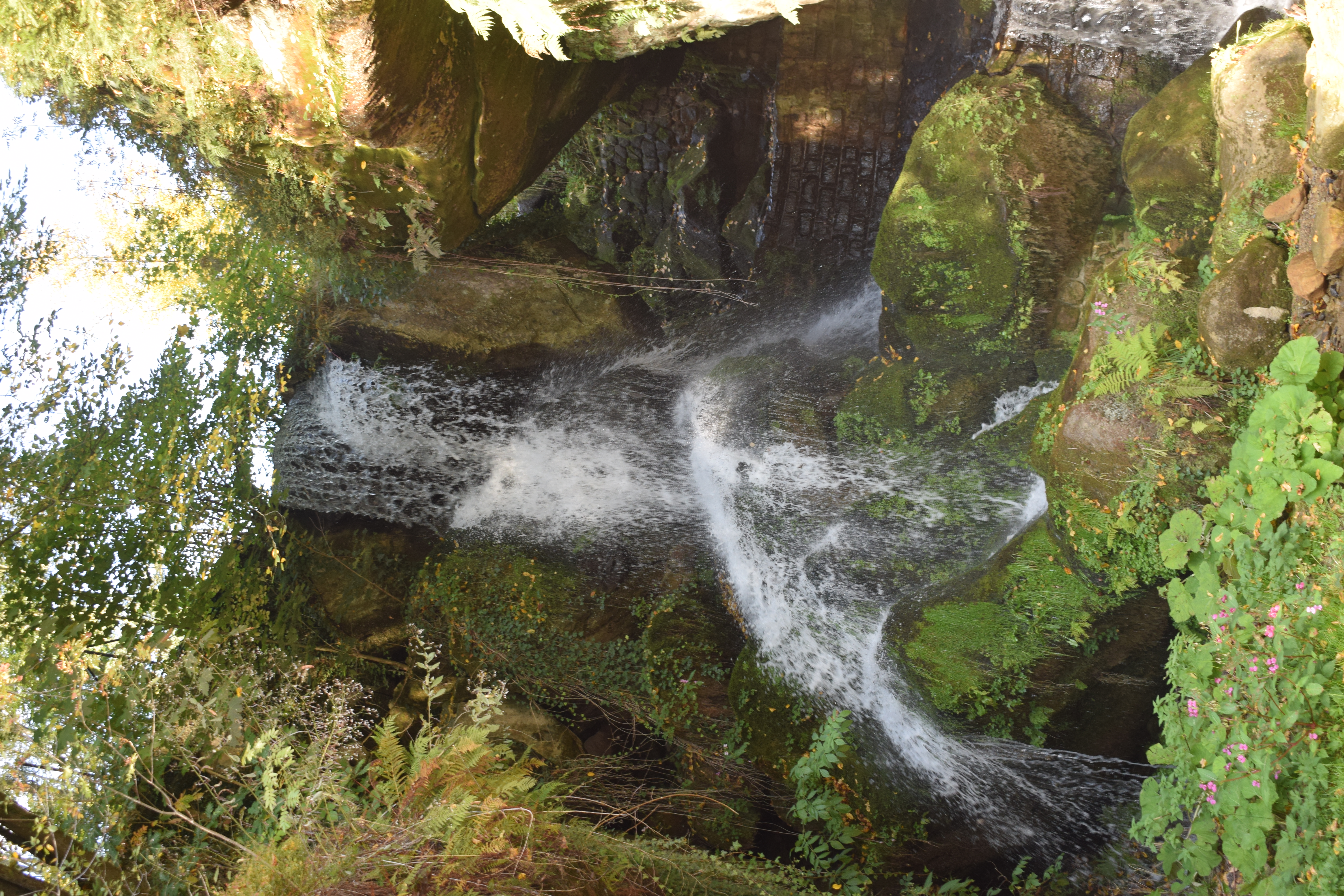
Thirty seconds of thunder. Phones up. Children shouting. A grown man next to me laughing like a boy.
Then it fades. The trickle returns. People turn around and walk to the inn.
Is it fake? No. It is a real stream, a real rock, a real waterfall. Just managed.
Is it a tourist trick? Absolutely. A historic one. And an honest one.
Nobody hides how it works. Nobody pretends it is Niagara. The trick is the attraction, and everyone is in on it.
Not modern tourist kitsch. Historic tourist kitsch, and proud of it.
The inn – Not the cheapest, but the friendliest
Next to the waterfall stands the Gasthof Lichtenhainer Wasserfall. It opened in 1853, and the same family has run it for more than five generations.
Wood panels, antlers on the walls, a tiled stove. It looks like a postcard, but it does not behave like one.
It is not the cheapest place on my journey. But it was the friendliest, and the most helpful, of all the places I came across. Staff who smile because they mean it, who answer questions properly, who treat a stranger with a camera like a guest and not like a transaction.
The house classic is rainbow trout from their own smokehouse. If you come here, eat. You are paying for the kindness as much as for the food, and it is worth every cent.
Why I thought of Uganda on a tram in Saxony
Sitting on that rattling tram, I kept thinking about Africa. About Uganda, in particular, where I have just proposed a heritage train between Kampala and Jinja, the old railway town with its railway museum and the source of the Nile.
Here in Saxony is the proof that it works. An old line. Old cars, kept on purpose. A destination at the end of the line. Locals and visitors on the same tram. A little show at the end. And an inn that makes you want to come back.
Nothing here is high-tech. Everything here is thought through.
My idea: a Kampala–Jinja heritage train for Uganda
What this trip taught me
Some countries hide their old things. Others repair them, rename them, or replace them.
Bad Schandau kept them. The old tram. The old weir. The old inn. The old trick with the water.
And people still come, by ferry, by tram, by the thousands, to watch a waterfall being switched on.
Heritage is not what you preserve behind glass. It is what you keep running.
Old is not a weakness. Old is a story. And a story, told honestly, is what people travel for.
I write it down here so I will remember it, and so somebody, somewhere, might copy it.
More from my travels: A journey through Germany's memory: Peenemünde, Wittenberg, Halle, Berlin
Search my network – plus over 50 African info, tourism and travel sites
All photos (c) Remo Kurka. Written October 2026.

